Formula Indie Sessions : Interview with Komrad

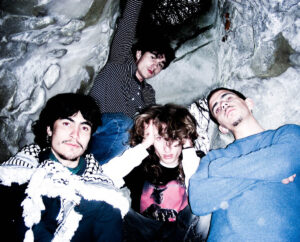
For context: Komrad is a duo made up of Olaf Pyttlik, from Germany and Clinton Skibitzky, from Canada
What is your earliest memory connected to music?
Olaf: I grew up in a musical family. My dad was a music teacher in our small town and my mother a hobby musician. Therefore, music and various musical instruments were part of my upbringing for as along as I can remember. Of course I was obligated to take piano lessons as well, but what I really wanted to do was to explore my own musical ideas rather than reproducing material from long-dead composers.
Clinton: I had more of an interest in sound in general than in music when I was young. For instance in early 1980’s myself and two other friends started what really was an ancestor to today’s podcasts. We recorded interviews, news and music on cassette tapes using whatever home stereo systems we had access to and then circulated the tapes to friends and neighbours.
How did your passion for creating music begin?
Olaf: I was about 14 year old when I started to create my own music. Back then I used whatever equipment I could find from my father’s music school and spent days in the basement experimenting with sounds and recording devices. That was in the mid 80’s, and when MIDI and mainstream synthesizers became affordable, I was completely hooked. I invested whatever time and money I had into exploring this new technology, so I would be able to record my own music more easily. By the time I graduated from high school I was certain that I wanted to be a professional musician/composer.
Clinton: I started trying to write my own music when I first got access to a computer that could sequence MIDI and a synthesizer that could connect to it. I would have been around 19 years old at that point.
What’s the story behind your current music project?
Olaf: During the pandemic of the early 2020’s I hit a bit of a creative wall. I felt rather empty and overall uninspired as far as my passion for creating more music was concerned. There was this general feeling of ‘who will listen to it anyways?’ and ‘will my career as a composer still have a purpose once this is over?’ in the air. So I turned to Clinton for inspiration to ‘jump start’ my creative juices again. For him music has always appeared to me as a source of fun and pleasure rather than a need to impress or to make it a career. So we started writing together just for the joy of it. It was for nobody else but for ourselves – no client or audience. Which was exactly what I needed at the time. Eventually we had enough for a full album, so we decided to release it.
Clinton: By the time we started Komrad, Olaf and I had been friends for more than thirty years. We also own a recording studio together where I do most of the business management and Olaf does most of the music creation. Despite our long history we had never tried to create music together, partly because I consider myself more of a hack than a real musician or composer. When Olaf suggested we do a project together I was excited about the idea and flattered that he would think it worth his time to work with me on an album.
How would you describe your sound to someone who has never heard your music before?
Olaf: I would describe it as a 1980’s sound combined with modern production and writing techniques; a kind of modern retro. All the synth gear was vintage but everything else was contemporary as far as production and listener expectations was concerned.
What is one thing you’ve learned that completely changed the way you make music?
Olaf: Most of my professional work is done with modern software-based productions tools, like soft synths, samplers and so on. A lot of these tools are amazing. Even the most basic of synthesizer plugins comes with 100s, if not 1000s of sounds. That is pretty impressive but it can also stifle your creative flow. A wealth choices does not always guarantee better results. Once we entered the realm of vintage equipment, we were a lot more limited with our options. A DX7 synth, for example, has a bank of 32 sounds. That’s it. In a way, it forces you to be more focused on the quality of your writing and arranging, which I found very inspiring and refreshing.
What tools, instruments, or software are essential in your creative process?
Olaf: We used Logic as our main recording platform. That is where all the mixing, editing and sound-shaping took place. However, rather than using its own or 3rd party synth plugins we, exclusively tried to only use vintage hardware synths, samplers and drum machines. Most of those were either original devices from the 80’s or modern reproductions.
Clinton: I mostly write on keyboards. Either with a hardware synth where a particular sound might inspire me, or just on a piano where I can experiment with different ideas
Which indie artist or song are you loving right now?
Olaf: Not sure if it qualifies as indie per se, but I recently added songs to my favourite playlists by Nothing but Thieves, Matt Maeson and The Format. Pretty main stream stuff, but in my opinion excellent writing and production. My German friends also introduced me to bands like 100 Gecs and Disarstar which impressed me.
Clinton: I am not certain I have a good list of indie artists at the moment, but a few artists I have recently discovered are Sofia Isella and Gia Ford.
How have your personal experiences influenced your music and artistic vision?
Olaf: I think life itself will always influence your creative output, no matter what your experiences. For me there was no single thing that changed my work but a collection of experiences that are hopefully reflected in my lyrics.
Clinton: Probably a good half of the songs I write are essentially a form of personal therapy, so yeh, personal experiences are inseparable from the music.
What emotions or messages do you hope listeners take from your work?
Olaf: I would like to think that our listeners will have a small insight into our minds and emotions through our songs – anything from simple fun and joy to more serious moments of reflection
What’s the most important lesson music has taught you so far?
Olaf: There is no absolute truth or perfection when it comes to personal expression. Especially working with a co-writer has taught me that there are many ways to communicate musically, even if they are different then your own preferences or likes. I try to translate that to my life outside of music. There are many equally valid ways to look at the world.
What is a dream venue or festival you would love to perform at?
Olaf: Either at the Cologne Soccer Arena or my living room
Clinton: Wherever Olaf wants to play is good for me! Although his living room is pretty small…
If you could collaborate with any artist, past or present, who would it be and why?
Olaf: Prince for his limitless creativity and depth of performance and production, Morten Harket from A-ha for his unique voice abilities, which are both beautiful and filled with emotions that I have not found in other performers.
Clinton: You know I find collaboration in songwriting quite challenging. I don’t like negotiating lyrics and I feel self-conscious about my instrumental and vocal skills when writing music. Heck, it took me 30 years manage to collaborate with Olaf!
Where can our listeners follow and support your music? (Website,Spotify, IG, links)
Apple Music: https://music.apple.com/ca/album/transactionary/1761191214
Spotify: https://open.spotify.com/album/5mOpz5lXqOpvCawZb7qOgZ?si=NFi4k3C1RoaehaQWzqsEQw
Looking toward the future, what’s your dream for the next chapter of your musical journey?
Olaf: Just to continue to be able to work with my best friend and share some special bond that only a co-creative process can provide. Fame and lots of money would be great, too.
Clinton: We actually are working on our second album in the studio right now. We plan to release it later this year.
What do you hope listeners will discover about you along the way?
Olaf: I have always tried to share my personal journey through life with my music and lyrics. I hope listeners will be able to find something within them that resonates with there own life experiences.