Formula Indie Sessions — Interview with Phil King

Prepared for Alessandro Cicioni / Euro Indie Music Network Artist: Phil King / The Phil King Project | Jimmy Taz Productions
Introduction of the project
Phil King is a producer, artist, and songwriter based in the Golden Isles, Georgia.
His two catalogs — Phil King and The Phil King Project — reflect two sides of the same storyteller: one where he stands at the microphone as the artist, and one where he steps back as producer and writer, taking his stories into styles and genres that go beyond what any one voice can cover alone.
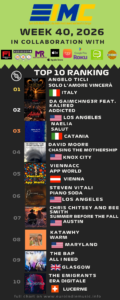
Three of his tracks have charted on the Euro Indie Music Chart: Loving After Midnight (Phil King) peaked at #180 and charted for five consecutive weeks; The Day She Took My Name (Phil King) debuted at #131; and I Don’t Want It (The Phil King Project) debuted at #141 — with all three charting simultaneously in Week 20 of 2026.
The connecting thread in everything he does is the same: real life, real people, real emotion. He spent many years in Emergency Medicine before dedicating himself full-time to music, and that career shaped every story he has ever written.
Q1. What is your earliest memory connected to music?
I had a little record player when I was four or five years old. My first records were Davy Crockett by Fess Parker, and “My Bonnie” — Tony Sheridan backed by The Beatles. I wish I still had those records.
I never remember a time when music wasn’t in my life. It has simply always been there, like breathing. I didn’t discover music at some point — it was just part of me from the beginning.
Q2. How did your passion for creating music begin?
I used to cut the grass as a boy with my AM radio. In one afternoon I’d hear The Beatles, Johnny Cash, The Supremes, Jimi Hendrix — all of it back to back. I didn’t understand genre. I just understood that certain things made me feel something and others didn’t. That’s still the only filter I use.
When I was twelve, I got a guitar for Christmas. I didn’t know a single chord. I didn’t wait to learn one either. The day I got it, I strummed the open strings and sang a song I made up right there — about something that mattered to a twelve-year-old. It was silly. But it was mine. I’d already been writing poetry before that, so the words were ready — the guitar just gave them somewhere to live.
That was the beginning. Everything since has been an extension of that same instinct: something happens in life, and I need to write it down.
Q3. What’s the story behind your current music project?
I started with Phil King — that’s me as the artist, the vocalist, the face on the stage. Southern Rock. Classic Rock. Symphonic ballads. I had a band in Los Angeles called Phil King & Georgia — two lead guitars, bass, drums, keyboard, and three Black female harmony singers. We played the full Southern Rock production. I wrote uptempo songs and beautiful ballads. That’s where I built my craft as a live artist.
As the years went on, I started accumulating stories that wanted to go places my voice couldn’t take them. Songs with a Bruno Mars pop soul feel. Songs that needed a female rock anthem treatment — think Pink or Kelly Clarkson.
Songs that called for a male vocal ensemble with that big melodic rock guitar sound. So I created The Phil King Project as the vehicle to take those stories exactly where they needed to go — without forcing them into a mold they didn’t fit.
Both names. Same storyteller. Every single time.
Q4. How would you describe your sound to someone who has never heard your music before?
Honest. That’s the word I keep coming back to.
As Phil King, I’m in the Southern Rock and Classic Rock tradition — the kind of music that tells you a story and means it. Think Tom Petty, Bruce Springsteen, Bob Seger. Real people. Real situations. Production that breathes.
As The Phil King Project, the range is wider — from a Bruno Mars-style Pop Soul groove to a full female rock anthem — but the honesty doesn’t change. The song always leads.
I let the story tell me what it needs to sound like, and then I build toward that.
Tony Michaelides — who spent decades as publicist for David Bowie, U2, Peter Gabriel, and The Police — called my music “something that hits home on the first play.” That’s what I’m after. Every time.
Q5. What is one thing you’ve learned that completely changed the way you make music?
That the song comes first. Always the song.
I spent years studying The Beatles — not just listening, but studying. The way Paul McCartney and John Lennon would weave a counter-melody into the guitar part, into the bass line, into the harmonies, all working together to support and lift the vocal melody. That architecture changed everything for me.
Harry Chapin did the same thing with storytelling — every one of his songs is a complete movie.
When I understood what was actually happening inside those songs, I stopped thinking about arrangements as decoration and started thinking of them as the story itself.
Q6. What tools, instruments, or software are essential in your creative process?
I record and mix in Logic Pro. That’s the consistent thread across everything I do.
What never changes is the standard.
Over many years in this business, I’ve built genuine friendships with some of the finest session players working today — musicians from Nashville, Atlanta, and Philadelphia whose credits include the Yellowstone TV soundtrack, the Grand Ole Opry, Garth Brooks, Carrie Underwood, George Strait, and Grammy-nominated work with Deep Purple and Alice Cooper.
Those aren’t transactions.
They’re relationships built over a long time, and everything I’ve absorbed from those people — the way they hear a song, the standard they hold themselves to — that shows up in everything I make.
At the end of the day, I want a song judged on one thing only: does it make you feel something?
Not the tools. Not the process.
The song. That’s the only question I’ve ever cared about.
Q7. Which indie artist or song are you loving right now?
I follow great songs — wherever they come from, whatever genre they live in. On any given day I can go from Bruno Mars to Lewis Capaldi to The Killers to Billy Joel without missing a beat, because for me there’s only ever one question: does it make you feel something? If the answer is yes, I’m in.
Q8. How have your personal experiences influenced your music and artistic vision?
Completely. There’s no separation between the life and the music.
I spent many years working in Emergency Medicine. I ran toward the worst moments of other people’s lives — the trauma, the grief, the fear.
I stood in rooms where families got the news no one is ever ready for. I fought alongside people in their darkest hours — people who were terrified, who didn’t know if they were going to make it, who needed someone to hold the line with them.
And then there were the moments that went the other way — someone who wasn’t supposed to pull through, who did — and that joy, the pure relief and disbelief on the faces of the people who loved them, is something I will never be able to put into words.
But I keep trying to, in the music.
You cannot work in that environment for that long without it changing how you see everything.
I carry every one of those moments into my writing.
When I write about heartbreak, or sacrifice, or love, or loss — I’m not imagining it. I lived near it. That time in the ER shapes every story in every song I write.
I also moved constantly throughout my life — always on the road, always meeting all kinds of people living all kinds of lives. That movement is in my music too.
It’s in American Made. It’s in The Day She Took My Name. It’s in all of it.
I want every listener to feel that my songs are about real life and real people — because they are.
Q9. What emotions or messages do you hope listeners take from your work?
That beauty can heal. That’s the simplest way I can say it.
I hope someone hears one of my songs in a dark moment and feels a little less alone in it.
I hope someone hears one while they’re in love and it makes that feeling bigger.
I hope someone who is grieving finds something in the music that helps them carry it.
I spent many years watching people fight for their lives. I know how much it matters to feel seen and understood.
If my music can do that for even one person on the other side of the world who’s never met me — that’s everything.
Q10. What’s the most important lesson music has taught you so far?
That beauty is powerful.
Real power — not decorative, not entertainment.
The kind that changes how you feel about being alive.
I’ve watched music do things medicine couldn’t. I’ve seen a song reach a person in a place where nothing else could get to them.
That’s not small.
That is one of the most important things a human being can do for another human being — and the fact that I get to spend my life doing it is something I don’t take for granted for a single day.
Q11. What is a dream venue or festival you would love to perform at?
The Greek Theatre in Los Angeles. That venue means something to me personally from my years in LA. An outdoor amphitheater, the hills behind it, a night performance — that’s the setting a song deserves.
That’s where I want to stand with a full band and play these songs the way they were meant to be heard.
Q12. If you could collaborate with any artist, past or present, who would it be and why?
Paul McCartney. And Harry Chapin.
Paul, because of the craft. The way he builds a melody — and then builds a second melody inside the first one, and a third inside that — I’ve spent more time studying his work than I can calculate. The counter-melodies woven into every instrument, all lifting the vocal. I’d want to sit across from him and write something together just to watch how he thinks.
Harry Chapin, because of the stories. Every Harry Chapin song is a complete human life compressed into four minutes. “Taxi.” “Cat’s in the Cradle.” “W·O·L·D.” The specificity of detail, the characters you can see, the endings that hit you like a door closing. He set the standard for what a song can be as a story, and I’ve been chasing that my whole career.
Q13. Where can our listeners follow and support your music?
- Spotify (Phil King): https://open.spotify.com/artist/1DiQwY7aCU3jcUh50yXi3G
- Spotify (The Phil King Project): https://open.spotify.com/artist/4Y8dGt6RUyrSg3vJdFLj0o
- Amazing Radio: https://amazingradio.us/profile/thephilkingproject
- SoundCloud: https://soundcloud.com/phil-king-228259891
- Instagram: https://www.instagram.com/thephilkingproject
- Facebook: https://www.facebook.com/thephilkingproject
Q14. Looking toward the future, what’s your dream for the next chapter of your musical journey?
More ears. More countries. More living rooms.
I want people all over the world to find these songs — in places I’ve never been, in languages I don’t speak, in moments I’ll never know about.
I want to perform with a full live band: seven or eight musicians, three-part female harmonies, the full Southern Rock production these songs were written for.
But I also want to stand on a stage and deliver the ballads the way they deserve — with live strings behind me, the kind of symphonic sound that fills a room and makes people feel something they weren’t expecting to feel when they walked in.
That is a moment I am working toward.
I want to keep writing, keep producing, keep pushing both catalogs into places they haven’t been yet.
The up-tempo songs that move a crowd.
The ballads that stop one.
The foundation is there — and the results are showing. Three tracks have charted simultaneously on the Euro Indie Music Chart: Loving After Midnight peaked at #180 over five consecutive weeks; The Day She Took My Name debuted at #131; and I Don’t Want It debuted at #141. The session players are world-class. The songs are real. Everything I’ve built so far has been built from scratch, alone, one song at a time — and the results have reached more than 15 countries already.
I’m just getting started.
Q15. What do you hope listeners will discover about you along the way?
I hope they discover that a man who spent many years running toward other people’s crises — who moved constantly, who has seen joy and tragedy up close more times than he can count — can take all of that and turn it into something that makes their lives a little better.
I’m not a polished marketing concept.
I’m a person with a lot of life behind me and a lot of music still to make.
I hope that comes through in every song. And I hope that when someone finds one of my songs in a dark moment, or in a beautiful one, they feel less alone in it.
That’s the whole thing, really. That’s always been the whole thing.
Phil King | The Phil King Project | Jimmy Taz Productions | ASCAP Golden Isles, Georgia jimmytaz99@gmail.com