Formula Indie Sessions _ Interview with Frog Shaman

Frog Shaman is a hybrid music project blending hip-hop, reggaetón, cumbia, Latin sounds, and traditional Asian influences into a sonic universe where spirituality meets urban chaos and digital experimentation.
With lyrics primarily in Spanish and French, Frog Shaman explores irony, melancholy, social critique, and identity through a poetic and introspective lens. Written by one creator and shaped with AI-driven production, the project challenges traditional boundaries between human creativity and technology.
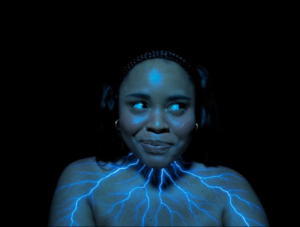
Dreamlike, dystopian visuals complete the world of Frog Shaman.
What is your earliest memory connected to music?
I have many memories of music from my childhood, but I think the earliest one has to do with the cumbia and boleros that played on the radio—that old music that sounded a little distorted, where you could picture the setting and the artists and let yourself be carried away by those rhythms, which were already considered old-fashioned even back then.
How did your passion for creating music begin?
Ever since I was a kid, music and dance have always fascinated me, and I think it all started when I saw Michael Jackson in the “Black or White” video. It was amazing to see that, in addition to dancing and singing, you could tell stories through images combined with music.
What’s the story behind your current music project?
My current single, “Lassitude,” is very important to me because it marks a real turning point in the Frog Shaman project. The lyrics are far more personal and intimate than before, while production leans into a more accessible and almost minimalist atmosphere.
The song explores the paradox of loneliness: how we sometimes crave solitude when surrounded by others, yet when we finally find ourselves alone, we desperately long for someone by our side. That contradiction is at the heart of the track.
How would you describe your sound to someone who has never heard your music before?
It’s a wild mix of all sorts of instruments that have little or nothing in common, all coming together in one song—it’s almost like the beginning of a joke: a Japanese shamisen, a mariachi trumpet, and a guacharaca walk into a bar…
Plus, it’s in several languages, and it touches on topics that few people talk about these days.
What is one thing you’ve learned that completely changed the way you make music?
Stromae’s music was truly inspiring; it taught me that every sound, every change in rhythm, and every instrument should serve a narrative purpose. If you have songs that are very chaotic or hybrid in nature, they should be balanced with moments that are extremely simple and almost uncomfortably human. It is that contrast that really makes an impact on your style. And I would probably emphasise the balance between the danceable and the tragic: even in the light-hearted there must be a shadow, and in the dark there must be some irony or movement.
What tools, instruments, or software are essential in your creative process?
I usually write the lyrics in Google Docs or on a simple piece of paper with a pencil, play around with them, and flesh them out in Suno. I use my MIDI controller in Ableton Live, as well as Audacity. I generally use those programs, but I also like to incorporate different vocal techniques or instruments I have at home, such as the guacharaca, the shamisen, or making sounds with my mouth.
Which indie artist or song are you loving right now?
There are times when I listen to certain artists more than others. As I mentioned earlier, Stromae has been a huge influence, but I also listen to a lot of different Colombian and Mexican cumbia artists. Other artists like Calle 13, Rubén Blades, have also played an important role in influencing my music. Right now, for example, I’m fascinated by Uruguayan murgas and the salsa of the Fania All-Stars.
How have your personal experiences influenced your music and artistic vision?
I think everyday life is a constant source of inspiration for my music; everything counts.
What emotions or messages do you hope listeners take from your work?
Frog Shaman is not only a wild mix of genres and instruments; it’s also about talking about what almost no one wants to talk about: discontent, the helplessness caused by injustice, depression, sins, and loneliness. All of this is presented with transparency that only irony can provide. When it comes to that, everyone expresses their own feelings—that’s the beauty of music; everyone can interpret the same song in different ways.
What’s the most important lesson music has taught you so far?
I think the most important thing is to express your feelings in an authentic, transparent way. To let different elements – such as the instruments, the rhythm, the lyrics and even the visual elements of the song – speak for themselves and convey a message, without fear and without overthinking it.
What is a dream venue or festival you would love to perform at?
There’s a really lovely festival that takes place in Switzerland in the summer called the Paleo Festival; I love the atmosphere. Another event I love is ‘Rock al Parque’ in Bogotá; it’s a free event that has done a lot to help the music scene in Colombia grow.
If you could collaborate with any artist, past or present, who would it be and why?
Definitely Stromae. As I said before, he’s been a huge inspiration for my project and someone I personally admire and respect.
Where can our listeners follow and support your music? (Website,Spotify, IG, links)
Youtube: Frog Shaman – YouTube
Spotify: https://open.spotify.com/intl-es/artist/4xXZPyZpuTkIsnKxBaGTFl?si=oUvHRr_eRZmJSFRL-ZeYug
Instagram: Frog Shaman (@frog.shaman) • Fotos y videos de Instagram
Looking toward the future, what’s your dream for the next chapter of your musical journey?
For a while now, I’ve been working on two projects at the same time: an EP in Spanish and an album in French. They’re both very different, and I’ll be releasing them at different times; I think the Spanish one will be out first, will be released later this year. I can give you a sneak peek at the title: ‘Un tipo raro’.
What do you hope listeners will discover about you along the way?
I think I’m more interested in listeners discovering things about themselves when they listen to my music.