Formula Indie Sessions _ Interview with Fanny Alexandra

Introduction of the project
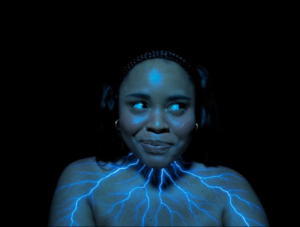
Fanny Alexandra is an alternative songwriter and artist drawn to emotionally honest music — the kind that feels a little haunted, a little beautiful, and a little dangerous at the same time. Her work blends grunge, alternative rock, dark pop, and poetic storytelling into songs that explore identity, longing, survival, love, addiction, faith, and the strange ways people try to save themselves. At the center of it all is songwriting first: raw emotion wrapped in vivid imagery and melodies that stay with you longer than you expect.
What is your earliest memory connected to music?
Probably listening to my grandparents playing. My grandfather was a respected flutist, my grandmother loved the violin. I never experienced a christmas without classical music being played. I’ll probably never.
But also sitting in the car as a kid and feeling songs before I even understood the lyrics. I remember realizing music could completely change the atmosphere of a room — or your whole emotional state — in like three minutes. That felt like magic to me.
I also used to romanticize everything dramatically as a child, so music became the soundtrack to that very quickly. (Which honestly explains a lot.)
How did your passion for creating music begin?
I think songwriting started as a way to process things I didn’t really know how to say out loud. I was always writing something — poems, random thoughts, little stories — and eventually music became the place where all of it connected.
The funny thing is, I never really approached it like “I’m going to become an artist.” It was more like… if I didn’t write, I felt worse. So it became necessary long before it became public.
What’s the story behind your current music project?
It’s really about contradiction. Beauty and destruction. Strength and vulnerability. Wanting to disappear while also desperately wanting to be understood.
A lot of the songs live in that tension.
I’m interested in writing music that feels intimate but still cinematic emotionally — like standing in the middle of chaos but noticing one tiny human detail that suddenly breaks your heart.
I also think this project is me learning how to survive without romanticizing pain the way I used to.
How would you describe your sound to someone who has never heard your music before?
If grunge, alternative rock, dark pop, and poetic late-night overthinking had a child.
Melodic but heavy emotionally. Pretty melodies saying slightly concerning things.
What is one thing you’ve learned that completely changed the way you make music?
That honesty is more powerful than trying to sound impressive.
People can feel when you’re hiding behind aesthetics or “coolness.” The songs that connect most deeply are usually the ones that scared me a little to write.
Also: sometimes the first demo vocal at 2am is impossible to beat emotionally, no matter how expensive the studio is afterwards.
What tools, instruments, or software are essential in your creative process?
Lyrics notes at inappropriate hours. Voice memos full of terrible humming. Guitar. Piano. Coffee. Mild emotional instability.
And honestly, atmosphere matters a lot to me. Lighting, visuals, films, photography — all of that influences songwriting for me as much as instruments do.
Which indie artist or song are you loving right now?
I’m constantly discovering new artists, which is dangerous because suddenly I have 400 open tabs and an identity crisis.
Lately I’ve been very inspired by artists who balance rawness with strong songwriting instead of hiding behind production trends. I love music that still feels human and imperfect.
How have your personal experiences influenced your music and artistic vision?
Completely.
I don’t think I’d write the way I do if life had felt simpler to me. A lot of my music comes from trying to understand difficult emotions instead of running from them.
But I also don’t want my art to just be “sad.” I think there’s resilience in it too. Humor. Defiance. Beauty. Even in darker songs, there’s usually still some small part reaching toward hope.
What emotions or messages do you hope listeners take from your work?
I hope people feel understood.
Not fixed. Not lectured. Just understood.
And I hope the music reminds people that being sensitive or emotional isn’t weakness. Some of the strongest people I know are the ones who stayed soft after life gave them every reason not to.
What’s the most important lesson music has taught you so far?
That connection matters more than perfection.
A technically perfect song with no soul disappears quickly. But an imperfect song that tells the truth can stay with someone for years.
What is a dream venue or festival you would love to perform at?
Honestly, anywhere with a crowd that feels emotionally alive.
But dream-wise? A dark stage, huge atmosphere, thousands of people screaming lyrics that once existed only in my bedroom notes app would be pretty surreal.
I have to make clear that I’m a songwriter first, not a performer.
If you could collaborate with any artist, past or present, who would it be and why?
Probably someone fearless emotionally. Artists who weren’t afraid to be messy, human, poetic, imperfect.
The artists I admire most are usually the ones who made people feel less alone.
Where can our listeners follow and support your music? (Website, Spotify, IG, links)
You can find me as Fanny Alexandra on streaming platforms and social media. I’m incredibly grateful to everyone who’s supported me so far — genuinely. Seeing people connect with songs that came from very personal places still feels unreal to me.
Spotify: https://open.spotify.com/artist/0OBgzNzxjVAGrqGjHnXwGa
Instagram: https://www.instagram.com/fannyalexandraofficial/t
link
YouTube: https://m.youtube.com/@officialFannyAlexandra?ra=m
Looking toward the future, what’s your dream for the next chapter of your musical journey?
To keep growing without losing the honesty that made me start in the first place.
I want to release music that feels timeless to people. Build a world around it. Create visuals that feel immersive and emotionally real. And hopefully keep evolving while still sounding unmistakably like myself.
What do you hope listeners will discover about you along the way?
That there’s more light in me than people might initially assume from the aesthetic.
The darkness in my music is real, but so is the hope. So is the humor. So is the love behind it.
I think the real story isn’t destruction — it’s survival.