Formula Indie Sessions : Interview with Errands

What is your earliest memory connected to music?
Paul: I remember seeing The Offspring’s video for Pretty Fly (For a White Guy) and becoming obsessed. We listened to a lot of good music in my house—U2, Bowie, the Stones, etc.—but it wasn’t until my brother handed me a Metallica single with “Creeping Death” and some live tracks on it that I started annoying my parents for guitar lessons.
Alvaro: For me, it was The Offspring too. When I was eight, I got my hands on Smash and completely wore that album out. I played it nonstop until it was basically part of me. That record hit hard, and from then on, I was hooked. Then I got into Iron Maiden, ACDC
Gokay: I remember watching Headbangers Ball and seeing the greats like Nirvana and Metallica for the first time. That was my first real encounter with rock. I was allowed to buy one cassette a month, so I’d spend forever trying to pick the right one—and I completely wore those tapes out.
How did your passion for creating music begin?
Paul: As soon as I got my hands on a guitar, I was always trying to come up with riffs or chord progressions—anything. Songwriting fascinated me very early on; it felt like magic, a secret weapon to express something different.
Gokay: I was always drawn to the drum beats in the songs I listened to. I used to hit pans and whatever I could find, trying to figure out the rhythm long before I ever held a pair of drumsticks. Then one day I saw a live clip of the Red Hot Chili Peppers, and Chad Smith was absolutely smashing it. To my kid eyes, it looked incredible—the cymbals, the energy, the sheer physicality of it all. And he was just sitting there like a boss while the others were running around the stage. That’s when I knew I had to do this.
What’s the story behind your current music project?
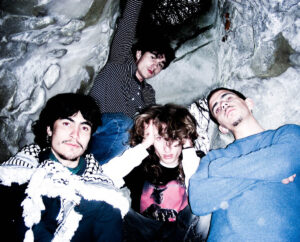
Gokay: Errands started through a Facebook ad where I met Paul. We clicked right away, jamming riffs on the spot. Later, Alvaro—who was a close friend of mine—joined. He was a guitar player at the time, but since we needed a bassist, he happily picked up the bass. After a while, we realised we needed a fourth member. Stan answered one of our ads and quickly became part of the band.
He had been travelling when the war in Ukraine broke out, so things could have gone very differently for him. But that’s how the four of us came together.
How would you describe your sound to someone who has never heard your music before?
Paul: We’re a rock band bordering on metal, but we always try to keep things raw and not overproduced. With production these days being so polished—music sounding clean and perfect— we can’t help but push back and leave in some grit. Still, we don’t limit ourselves in the studio. If we want a string part or some wild sound-design element, we’ll make it happen if it serves the song. We use Ableton Live to support our live show, but we intentionally limit our dependency on the laptop so that if it gets lost or breaks, the show can still go on.
What is one thing you’ve learned that completely changed the way you make music?
Paul: Leaving room—for melodies, for vocals, just allowing the song to breathe. Coming from a metal background, it’s easy to fall into the “too many riffs” trap.
Gokay: Dynamics are incredibly important: how a tune builds, breaks, or ties different sections together.
Paul: The same goes for sound design. It’s easy to grab samples online and tweak them to fit, but it can feel forced. If you pull audio from what you’ve already recorded and manipulate that, you’re guaranteed more interesting results because the sounds already belong to the same world. Having vocals early also helps shape the arrangement.
What tools, instruments, or software are essential in your creative process?
Paul: Most songs start on a nylon-string guitar, with rough ideas that ultimately evolve in the rehearsal space.
Gokay: We really value capturing each person’s attitude and personality in the track—that’s what makes it a band. Jamming on one idea often sparks several more.
We use Ableton Live to capture guitars, drums, vocals, synths—everything—and we’ve self produced all of our music so far.
Which indie artist or song are you loving right now?
Paul: “Lovers’ Leap” by Elbow is a great tune.
Gokay: I’ve been listening to Mark Lanegan a lot lately
Alvaro: I love Too Old to Die Young by Brother Dege. It’s got that dark, gritty Southern vibe. Stan: I listen to a lot of Fontaines D.C these days
How have your personal experiences influenced your music and artistic vision?
Paul: Lyrically, everything is influenced by personal experiences—whatever they may be. Many of our songs deal with issues like substance abuse, growing older, or the ways the internet is changing and dividing us, or just making us unhappier. I would, however, like to write some tunes that make absolutely zero sense, just for the craic. Some of my favourite songs out there make you ask yourself, “What is this about, and what drugs were you on?”
Stan: We know we play heavy, loud, aggressive music, but we want the artwork to represent something deeper. Good artistic vision, to us, is something eye-catching that gives no clue about what you’re about to hear. Keeping some mystique or mystery in both the music and the artwork is very important to me.
Paul: We’re passionate about the idea that art belongs to humans, not AI. It’s tempting to use AI, especially when you don’t have the budget for videos or visual content, but we believe there’s an unspoken rule among creatives to disregard AI when it comes to creating art—music or visuals. We do this because it’s challenging and because it takes you somewhere unexpected. You learn something about yourself, and you hope others resonate with it. Handing that over to AI feels like a sin to us and defeats the purpose of creating in the first place.
What emotions or messages do you hope listeners take from your work?
Gokay: We hope anyone who listens to our music finds something in it that resonates with them. The idea of listening to a song thousands of times and still discovering new things is what makes a great song.
What’s the most important lesson music has taught you so far?
Paul: You get out what you put in. Never disregard an idea—always listen and at least try it. Music, for us, is a way to play like kids and stay young. It’s a world of discovery, imagination, and experimentation. You never know what the end result will be, and that mystery is magic.
What is a dream venue or festival you would love to perform at?
Gokay: We’re all from different parts of the world—Ireland, Turkey, Spain, Ukraine—so each of us has special venues and festivals we grew up going to. Playing any of the places that helped us discover new music and support independent artists would be incredible.
If you could collaborate with any artist, past or present, who would it be and why?
Gokay: We met Alain Johannes last year when he came to Barcelona, and we talked about working with him on our next album. That would be an unbelievable experience. His influence on some of the biggest bands on the planet is, in our view, underappreciated. Hopefully we can make that happen.
Where can our listeners follow and support your music? (Website,Spotify, IG, links) Stan: We’re on all the usual streaming platforms. Just Google “Errands band” and you’ll find us.
Looking toward the future, what’s your dream for the next chapter of your musical journey?
Gokay: Our goal has always been to write the best songs we can—and to write them for ourselves rather than trying to please a crowd. Our dream is simply to keep growing the band for as long as possible.
Paul: As long as we can keep hanging out, playing live, and writing music together, we’re already living the dream. When COVID put us all in lockdown, it was a real wake-up call—it’s easy to take what we have for granted. Forget streams or follows or even writing a great song—the fact that we
live in a time and place where we can meet up weekly and make music is something a lot of people unfortunately cannot do.
What do you hope listeners will discover about you along the way?
Paul: We hope listeners discover something they can relate to in our music—or in us. Inspiring someone to start their own musical journey is one of the greatest achievements an artist can ask for.
To stay up to date with Errands, you can follow them on Instagram @errandsband. If you want here you can add a representative Youtube video to insert below the interview 🙂 https://www.youtube.com/watch?v=GiuHeSr51yk