Formula Indie Sessions – Interview with Stefano Manrique
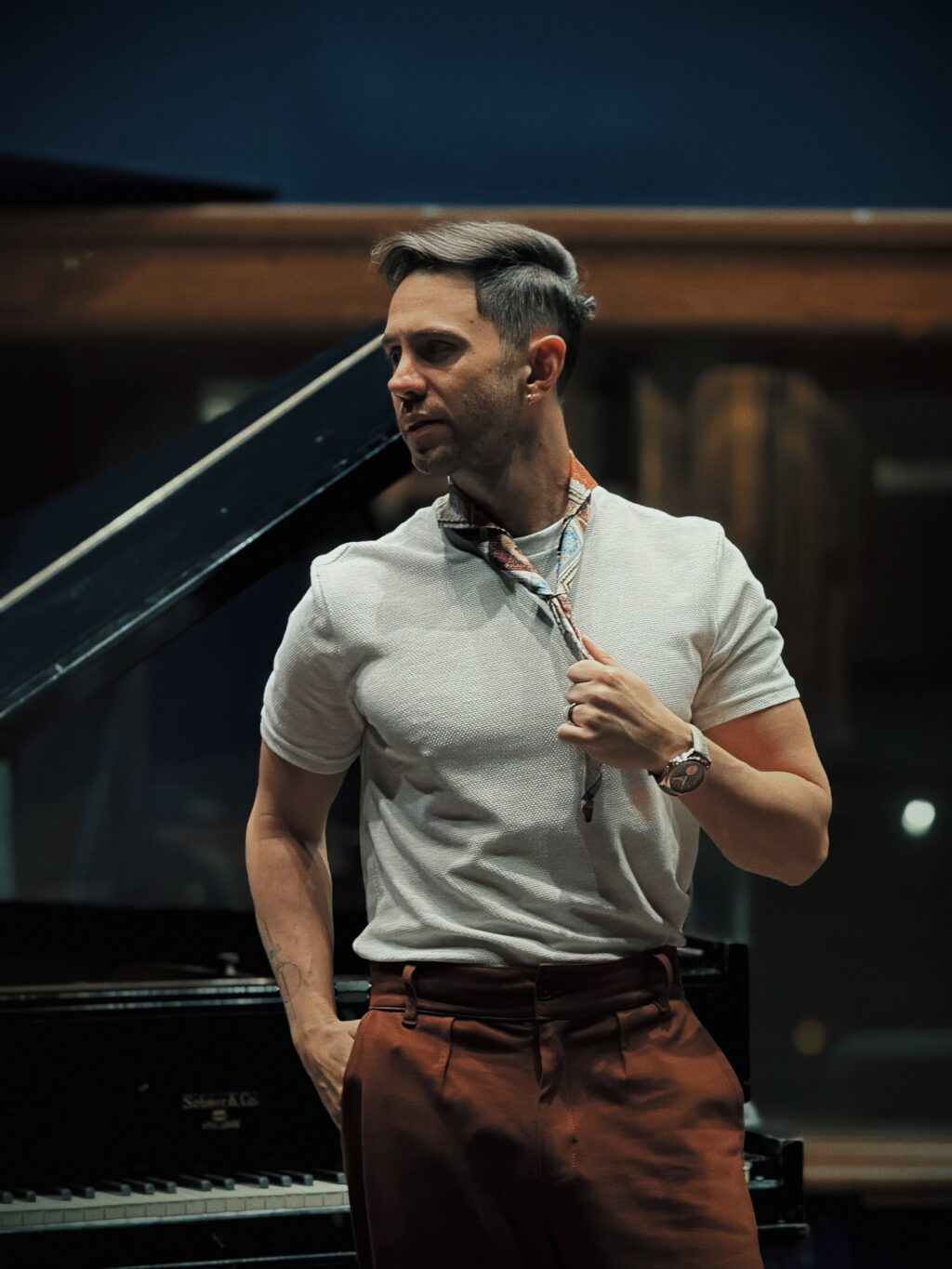
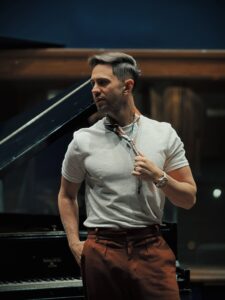
Stefano Manrique is a Colombian singer-songwriter and producer whose work blends Latin roots with a wide range of global influences. He first gained recognition through his work in film and television, contributing to soundtracks and productions with major Colombian networks including Caracol Televisión and RCN Televisión.
As a recording artist, he has built an international audience across the United States, Spain, and Mexico, with releases that have charted on Apple Music US charts and iTunes Colombia rankings. His debut album, Country Pop Latino marked a successful cross-genre entry in the country space, earning editorial support from Spotify playlists such as New Music Friday Country.
A Latin Grammy Award nominee, Manrique continues to evolve artistically through his Soul Pop Latino concept—a sound that blends the emotional depth of soul with the warmth of his Latin heritage. Of Italian and Arab descent, his work reflects a layered cultural identity and ongoing genre exploration.
What is your earliest memory connected to music?
There’s an old wall piano at my grandmother’s house. She was an opera singer, and she used to sing Muñequita Linda. That’s the first picture I have: her voice in that room, that song. I come from a family full of writers, painters, singers, actors. Art wasn’t something you “got into.” It was already there. I was lucky that way.
How did your passion for creating music begin?
I started playing around with the guitar, just learning some chords so I could play some of my favorite songs, and at the same time I was always writing poems and ideas. When you’re growing up, you just do these things because you love them. That’s the end goal. There’s no further agenda. At least that’s how it was for me. I didn’t initially think of myself as someone who could write songs. That changed during my adolescence, when I started putting those ideas to music and realized I could actually create something of my own.
Later, I met Carlos Agüera, one of Colombia’s most important music producers and a Latin Grammy-nominated producer. He saw something in me and gave me the opportunity to start working with him, which I’m very grateful for. That experience opened up a completely different side of music for me. We ended up creating music and soundtracks for some of the most important Colombian series, films, and telenovelas. That’s where I really started understanding music not only as a songwriter, but also as a composer and producer, and how much more there was to explore.
What’s the story behind your current music project?
After Country Pop Latino, I felt ready to explore a new musical frontier. I’ve always considered myself more than an artist, just a music lover, and even an audiophile. I really enjoy the production and technical side of music, the details, the textures, and the process of trying to get a recording to sound as good as it can. So for me, making music has always been an ongoing exploration.
Country Pop Latino came from the years I spent in the U.S. and my love for country music. I wanted to see what would happen when I brought a genre I had fallen in love with into my own musical world, with my Latin roots. It ended up becoming the most important chapter of my career so far, and now I’m ready to explore a new direction.
When I started writing again, I found myself coming back to soul and R&B, which was mostly the music I had grown up listening to. Artists like Babyface and Eric Clapton were among the references I kept coming back to, while I was also bringing everything I had learned from Country Pop Latino into the new music. That’s when Soul Pop Latino started to take shape.
No Time No Place, my new single, was a perfect song to begin this new chapter because it came from a very honest place: reconnecting with music and with the process of making it simply for the love of it. I wrote it with Aria Fenix, my wife, who is also an incredible artist and songwriter. We both know how easy it is to get caught up in rushing toward the future and everything we expect from ourselves, and we often help each other come back to the present and find something here to be grateful for. That idea became the heart of the song.
How would you describe your sound to someone who has never heard your music before?
Warm. There’s usually a groove underneath, folk guitar on top, and soul in the vocal. There’s a lot of Latin influence, but I don’t necessarily want to do the obvious Latin things every four bars. I also use Spanglish when one language isn’t enough to express the idea. I like leaving air in the arrangements and giving the production room to breathe. If you like a good story, an R&B vocal, and a ballad that doesn’t rush you, you’ll probably find something familiar in my music. I don’t want it to sound like a mashup. I want it to sound like one person who happens to come from more than one place.
What is one thing you’ve learned that completely changed the way you make music?
Don’t edit while you’re creating. Let the idea finish before you decide if it’s good.
The other one isn’t technical: sobriety. When I stopped numbing my days, my life, and my experiences, the songs became more vulnerable, and the process of creating them became more conscious, slower, and even more technically precise.
What tools, instruments, or software are essential in your creative process?
The steel folk guitar. I write everything on it. Logic Pro, Apogee Duet, Slate mic, VSX headphones. Sometimes a small analog summing box so the mix doesn’t sound like a laptop. I keep the rig small on purpose. If the song only works in a “real studio,” I don’t trust it yet.
Which indie artist or song are you loving right now?
OneRepublic’s Need Your Love is on repeat.
For an artist, Aria Fenix. Yes, my wife. That’s not the pitch. She’s the writer I’m most obsessed with right now. We’re in the middle of her first Ballet Pop album, and she has a single out called Not Okay Today. There’s also a song that isn’t out yet called Jump that I can’t get out of my head. We joke all the time that she needs to finish recording it, or I’m not producing anything else for her. Even if it’s just for my personal consumption and never sees the public.
How have your personal experiences influenced your music and artistic vision?
Marriage. Getting to do life and make songs with the love of my life. Getting sober. Building companies because waiting for a label to decide my life felt disempowering. Living between Colombia and the idea of New York for years.
Being an artist also became more about the real work than performing a version of myself for social media. And there’s also a concept I came up with called “proof of craft,” which is about preserving human creativity in an AI era and in a sea of infinite generated content. I still want there to be evidence of the human being behind the work.
What emotions or messages do you hope listeners take from your work?
I think one of the things I hope people take from the music is that you can come from more than one culture and still have one voice. You don’t have to choose one side of yourself.
And with “No Time No Place”, I hope people can connect with the idea that slowness isn’t a personality flaw. Sometimes we’re so focused on the next thing that we forget to appreciate where we are.
“No Time No Place” has become a bit of a mantra for me: there really ain’t no time, no place but here.
What’s the most important lesson music has taught you so far?
I love finance, and I think there’s actually a lot in common between finance and music. To me, in music, consistency is the credit score. Talent without volume doesn’t compound.
We like to think every song we make is going to be the one, but I don’t believe it’s about one song. Behind a hit, there are usually years and years of devotion to the craft.
What is a dream venue or festival you would love to perform at?
Madison Square Garden. The first time I went to New York and visited it, the image got printed in my mind, and it never left. We’re planning to move to New York, and the overall energy of the city is incredibly inspiring to me. Any room there feels charged with pure motion and potential. So MSG is still the one at the top of the list.
If you could collaborate with any artist, past or present, who would it be and why?
Justin Timberlake, still. I really admire the way he moves between R&B, pop, and soul without losing himself. That’s a challenge I like.
For someone living, I’d love to work with someone in that Babyface or Oak Felder lane who still treats the vocal as the center of the production. And from the past, I’m always drawn to the guitar-and-voice artists, especially Clapton and the great ballad writers who knew how to let the feeling speak for itself.
Where can our listeners follow and support your music? (Website,Spotify, IG, links)
https://www.submithub.com/link/stefano-manrique
Spotify: https://open.spotify.com/artist/5QmOgnigMzwCp9MXowvpFP
YouTube: https://www.youtube.com/c/StefanoManriqueMusic
Instagram: https://www.instagram.com/stefanomanrique
X: https://x.com/stefanomanrique
Facebook: https://www.facebook.com/stefanomusicoficial
Start with No Time No Place. If you want the earlier door, Tal Vez and Te Sigo El Juego.
Looking toward the future, what’s your dream for the next chapter of your musical journey?
The next chapter is about continuing to build Soul Pop Latino, but making it bolder and more experimental than ever. I’m even bringing a little Italian into the project as a homage to my roots, and I envision a very robust album in the near future.
Beyond that, I’m really looking forward to opening the New York chapter of our lives and starting to play more and more in the city we love so much. And ultimately, I want a future full of creativity and freedom, with a strong catalog that can live in film, but can also become the soundtrack to someone’s life.
I also want to keep expanding the label and the world we’ve built with Aria into something that goes beyond the music, with experiences, merch, concerts, and everything else that can grow naturally around the art. You’ll definitely hear more about that soon.
What do you hope listeners will discover about you along the way?
I hope people understand that the fusion of genres has never been a strategy for me. When I made Country Pop Latino, singing country in Spanish as a Latin artist was still something very unusual. At the time, we were the only Latinos singing a country song in Spanish on Spotify’s New Music Friday Country in the U.S. It was a very honest exploration of what happens when you bring a genre you love into your own musical identity. Today, seeing more Latin artists and Spanish-language songs in those spaces is a great thing, but for me, it was already part of the exploration from the beginning.
I think listeners recognize authenticity, and the voice and the guitar will always be the root of it all. That has been true since day one, through my second album, and even if in the future I try even crazier fusions, they’ll always have to pass the ultimate test: is it a song I would put on if it wasn’t mine?
YouTube