Formula Indie Sessions _ Interview with MAIA

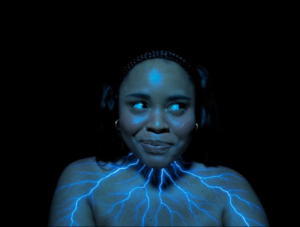
MAIA (Music Artificial Intelligence Artist) is an AI-generated music and visual project entirely conceived, written, and directed by Erika Buzzo, Italian singer-songwriter and marketing director.
MAIA isn’t just an avatar. She’s a narrative figure, a character-consciousness who observes contemporary relationships, emotional dynamics, and the invisible mechanisms that shape how we feel. Every song is a chapter, every video a scene, every visual detail part of a coherent, intentional story.
The project is built on total human control: lyrics, melodies, artistic vision, and visual identity are all guided by one hand. AI is used as an expressive tool, not a creative replacement. In that sense, MAIA exists somewhere between music, cinema, and conceptual art.
The aesthetic is cinematic, suspended, timeless. It dialogues with European cinema and retro visual sensibility, building a recognizable universe made of silence, stillness, symmetry, and restrained melancholy.
MAIA stands as a distinctively structured Italian AI music project entirely led by a woman, positioning itself as an artistic reflection on the relationship between technology, identity, and human sensitivity.
What is your earliest memory connected to music?
My memories are a bit blurred together. My mother told me I was already singing constantly at age two, especially Battisti songs. Then around ten, she’d ask me to sing “I Will Always Love You” for her friends because I was particularly in tune.
Then there was my father’s guitar. And karaoke nights. At sixteen, my first real stages. Music has always been part of my life: I don’t remember a time without it.
How did your passion for creating music begin?
At sixteen, I was obsessed with Carmen Consoli. Listening to her sparked this need to write my own songs. That’s when I started composing and writing, it felt like the natural next step after years of just singing other people’s music.
What’s the story behind your current music project?
MAIA was born from a simple need: I wanted to create music without the constraints of traditional performance. I’m a songwriter and creative director, not a performer. AI tools gave me the freedom to compose, arrange, and produce everything myself while maintaining complete creative control. MAIA became this character who observes relationships from the outside and translates what she sees into songs – it’s not autobiographical, it’s observational.
How would you describe your sound to someone who has never heard your music before?
Honestly? I’d just tell them to listen. It’s too hard to describe without falling into generic tags like “pop.” MAIA moves between different sounds and atmospheres – sometimes cinematic, sometimes more electronic – but those are just words. The music is something you need to experience.
What is one thing you’ve learned that completely changed the way you make music?
Not limiting myself to one genre. The more you listen to different styles, the more you absorb. I used to think I needed to fit into a specific category, but now I let the song dictate what it wants to be. That openness completely changed how I create.
What tools, instruments, or software are essential in your creative process?
SUNO for musical arrangements, Higgsfield and MidJourney for visual generation, Runway for selective animations, ElevenLabs for voice, and Premiere Pro for video editing. But the most essential tool is a notebook. I still write every lyric by hand first.
Which indie artist or song are you loving right now?
I listen to so many different things that I don’t really have a specific focus on one artist, especially in the indie scene. My playlist is all over the place – it depends on the mood, the moment. I absorb from everywhere rather than obsessing over one sound.
How have your personal experiences influenced your music and artistic vision?
Completely. Life and its experiences are the lifeblood of songwriting. Everything I observe, everything I feel, everything I see in others – it all feeds into the music. Without that human experience, there’s nothing to say.
What emotions or messages do you hope listeners take from your work?
It would be nice if people would recognize themselves in the songs. And sing along. That’s it, really, if someone listens and thinks “this is exactly how I feel” or catches themselves humming one of my melodies, I’ve done my job.
What’s the most important lesson music has taught you so far?
That the simplest things often work best. You can write the most complex arrangement, but sometimes a basic chord progression and a good hook are all you need. It’s humbling.
What is a dream venue or festival you would love to perform at?
I used to dream about Sziget Festival. There’s something about that mix of energy, diversity, and scale that always appealed to me.
If you could collaborate with any artist, past or present, who would it be and why?
As producers, Chet Faker or David Guetta. Chet Faker for that ability to blend electronic music with soul and emotion, there’s depth in his production. David Guetta because he knows how to make a track that moves people on a massive scale. Both approaches fascinate me for different reasons.
Where can our listeners follow and support your music? (Website,Spotify, IG, links)
The main channel is definitely Spotify, with Instagram & Youtube close behind. Here are the links:
- https://open.spotify.com/intl-it/artist/2X0ZMwmkS4nmKidc9i0Zms?si=-HbQM0TcTuim5au_lgyUiA
- https://www.instagram.com/maia.cantautriceai/
- https://www.youtube.com/@cantautricedilatta
Looking toward the future, what’s your dream for the next chapter of your musical journey?
Right now, I just won 3rd place for Best Music Video at the AI Design Awards international contest. So the next step is going to Barcelona to collect the award in February.
In the meantime, I’m finishing the next singles. I’m building this project step by step – each release adds another piece to MAIA’s universe.
What do you hope listeners will discover about you along the way?
As little as possible, honestly. I want the focus to be on the music, not on me. MAIA exists as her own entity: what matters is whether the songs connect with people, not my personal story behind them.
If you want here you can add a representative Youtube video to insert below the interview 🙂